AC Repair or Replace? How to Decide and Save Money
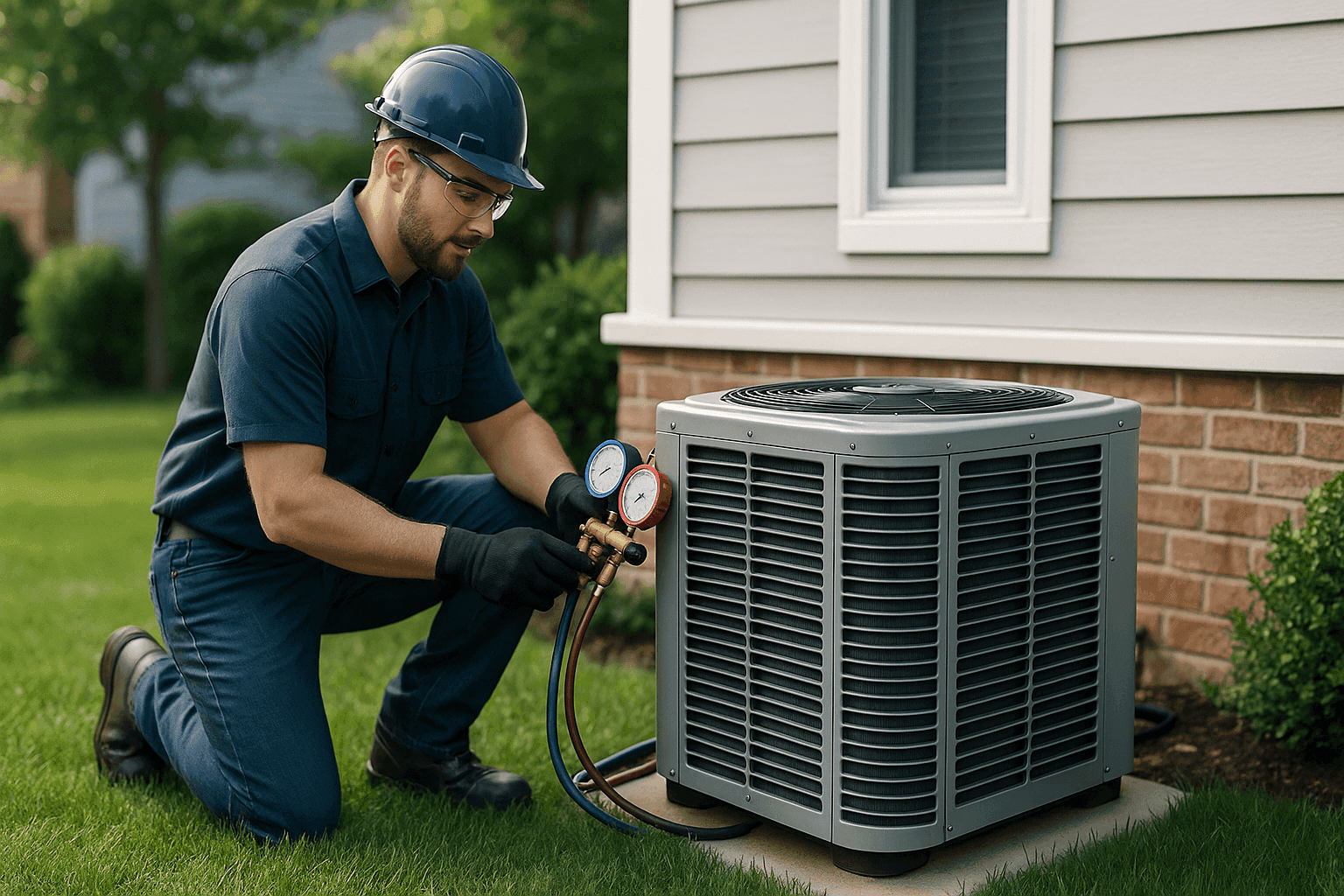
Sweaty nights. Stuffy meetings. The AC is on the fritz again, but is it time to fix it—or finally invest in something new? At Jewel Heating, we know this isn’t just a comfort issue. It’s about your wallet, your time, and your peace of mind.
We’ve helped families and businesses across the region make this call. With decades on the job, our team has seen every scenario—mid-July breakdowns, odd noises at midnight, and everything in between. Here’s our field-tested guide to help you decide what’s truly best for your home or business.
Common AC Failures and Their Fixes 🛠️
Most breakdowns sound worse than they are. But some are warning bells. Here’s what we see most often:
- Blowing warm air: Usually a bad capacitor, dirty filter, or low refrigerant. Quick fixes for pros.
- Strange noises (banging, squealing, grinding): Could be a loose belt, failing motor, or debris in the fan.
- Unit won’t turn on: Thermostat issues, blown fuses, or tripped breakers are frequent culprits.
- Short cycling: Dirty coils, clogged filters, or an oversized unit can cause this rapid on/off.
- Ice on coils: Often low refrigerant or blocked airflow.
Repairable issues: Filters, capacitors, contactors, and relays are usually affordable to swap. But compressor or coil failures? Those repairs get expensive fast—sometimes rivaling the cost of a whole new system.
According to the U.S. Department of Energy, regular maintenance can prevent over 80% of sudden AC breakdowns.
Warning Signs of a Dying AC Unit
Not every hiccup is a disaster. But watch for these red flags:
- Age: Most central ACs last 10–15 years. If yours is older, repairs may just buy time.
- Frequent repairs: If you’re calling for emergency hvac service every season, your system may be giving up.
- Rising energy bills: Older units lose efficiency, burning more power for less cooling.
- Uneven cooling: Some rooms icy, others stuffy? Ductwork or system sizing could be off, or the unit itself may be struggling.
- Excessive humidity: Good ACs should keep indoor air dry. If you feel sticky all the time, it’s a sign.
Think of your air conditioner like an old car. If you’re always at the mechanic and the gas mileage is getting worse, the end may be near.
The AC Repair vs. Replace Checklist
Before you make the call, walk through this list:
- How old is your AC? Over 12 years? Replacing may save money long-term.
- Have you needed major repairs (compressor, coil, control board) in the last 2 years?
- Are repair estimates more than $1,500?
- Is your unit using R-22 (“Freon”)? This refrigerant is now banned. Recharging is costly.
- Do you plan to move soon? Sometimes a quick repair makes more sense than a full upgrade.
- Are your energy bills climbing, even with regular HVAC maintenance?
- Does your system struggle on the hottest days?
If you answered “yes” to two or more, it’s time to seriously consider replacement.
Understanding the 50% Rule
Here’s a simple rule: If repairs cost more than half the price of a new system, replacement is usually smarter. This is called the “50% rule.”
Let’s say a new system is $7,000. If your repair bill is over $3,500—and your unit is more than halfway through its expected life—it’s time to look at new options.
Real-World Examples
- Case 1: A restaurant’s 13-year-old rooftop unit failed during a heat wave. The compressor was shot. Repair quote: $3,200. New unit: $6,000. With high summer occupancy and health code requirements on the line, the owner chose replacement. Less downtime, better efficiency, and lower future repair risk.
- Case 2: A homeowner called with a 9-year-old system blowing warm air. Diagnosis: blown capacitor, $250 fix. No major issues otherwise. Repair made sense.
- Case 3: Office building, 11 years old, repeated refrigerant leaks (R-22), and multiple failed repairs in the past 18 months. Replacing with a modern, energy-efficient system brought costs down and comfort up.
Quick AC Safety Checklist
Before you touch anything, keep these safety tips in mind:
- Shut off power to the unit at the breaker before inspecting.
- Never open sealed components or refrigerant lines—call a licensed technician.
- Watch for burning smells or visible sparks—these are emergencies.
- If water is pooling around the indoor unit, shut off and call for help.
- Check that all vents and returns are clear—blockages can cause overheating.
The Air-Conditioning, Heating, and Refrigeration Institute (AHRI) recommends homeowners avoid attempting electrical or refrigerant repairs themselves.
DIY vs. Call a Pro
DIY:
- Changing filters
- Cleaning dust from vents
- Resetting tripped breakers
- Checking thermostat batteries
Call a Pro:
- Refrigerant issues
- Electrical faults
- Compressor or motor replacement
- Repeated short cycling
- Airflow or ductwork troubleshooting
If it’s anything beyond simple cleaning or filter changes, bring in a certified emergency hvac technician. Modern systems have safety locks, high-voltage parts, and code requirements for a reason.
What Jewel Heating Pros Do On Arrival
Wondering what happens when you call us? Here’s our process:
- Listen first. We ask about recent issues, noises, and what you’ve already tried.
- Thorough inspection. We check all major components—compressors, coils, capacitors, contactors, wiring, filters.
- Test and measure. We use calibrated tools to measure refrigerant pressure, airflow, and electrical draw.
- Report findings. We clearly explain what’s wrong, what can be fixed, and what’s likely to fail soon.
- Options and advice. We lay out repair vs. replace scenarios—no pressure, just facts.
- Backed by code. All work follows local and national safety codes (refer to International Mechanical Code and state HVAC guidelines).
We also review your system’s warranty status. Many units have 5–10 year parts warranties, but labor is often separate. We’ll help you understand what’s covered.
Prevention & Maintenance Tips
Want to avoid that sudden breakdown? Here’s what works:
- Change filters every 1–3 months (more often with pets or high pollen).
- Schedule professional HVAC maintenance at least once per year.
- Keep outdoor units clear of leaves, grass, and debris.
- Check your thermostat settings—consider upgrading to a smart thermostat for better control.
- Seal and insulate ducts—leaky ducts waste cooling and money.
- Ask about whole-house fans and ventilation upgrades for extra comfort.
The EPA recommends annual HVAC inspections to ensure safe, efficient operation.
Costs & Time Factors
No surprises—just realistic ranges:
- Simple repairs: $150–$400 (capacitors, contactors, minor wiring)
- Moderate repairs: $500–$1,500 (motors, control boards, refrigerant top-off)
- Major repairs: $1,500+ (compressors, coils, extensive electrical)
- Full replacement: $4,000–$12,000+ (depends on size, SEER rating, and options)
Time:
- Most repairs: 1–4 hours
- Major repairs: 1–2 days (parts availability matters)
- Full replacement: 1–2 days for most homes and small businesses
Remember: investing in a more efficient system can save 20–40% on cooling costs, based on ENERGY STAR data.
When It’s an Emergency
Some problems can’t wait:
- No cooling during a heat wave—risk of heat illness for kids, pets, or elderly.
- Sparks, smoke, or burning smells—fire hazard.
- Repeated breaker trips—electrical risk.
- Water leaks onto electrical panels or ceilings—risk of damage or shock.
Jewel Heating’s 24-hour emergency hvac service is built for these moments. We prioritize safety and help you stay cool, day or night.
FAQ: AC Repair or Replace
Q: How long should my air conditioner last?
A: Most systems last 10–15 years with regular HVAC maintenance.
Q: What about window or mini-split units?
A: Window units last 8–10 years, mini-splits 12–15. Repairs follow the same 50% rule.
Q: Is it worth upgrading to a more efficient system?
A: Yes, especially if your current SEER rating is below 13. Modern systems can cut cooling costs by up to 40%.
Q: Will a new AC improve indoor air quality?
A: Often, yes—especially if you add advanced filters, UV lights, or humidity control.
Local & Seasonal Considerations
Our region’s hot summers and humid spells mean your AC works overtime. Systems here age faster than in cooler climates. Commercial kitchens and busy households put extra stress on cooling equipment. If you notice your system struggling at the start or end of the season, don’t ignore it—small issues can turn urgent fast.
Seasonal swings also mean spring and fall are the best times for non-emergency upgrades or Radiant Heating near you. Wait for a heatwave, and you’ll fight the rush.
When your comfort—and budget—are on the line, you deserve clear answers. Jewel Heating’s diagnostic process is built to give you options, not pressure. Our team is ready to help, whether it’s a quick fix or a full upgrade.
Call Jewel Heating now — or reach us anytime at 888-865-9429 .