How to Improve Airflow & Comfort With Professional Air Balancing
Your home should feel like a sanctuary—never a patchwork of hot and cold spots. When the air in one room feels like a sauna and another chills you to the bone, it’s more than just an annoyance. Uneven airflow can waste energy, strain your HVAC system, and mess with your comfort. For businesses, uncomfortable zones can hurt productivity and morale.
At Jewel Heating, our emergency hvac specialists see these problems every day in all kinds of spaces: historic homes with quirky layouts, modern open-concept offices, multi-story houses, and everywhere in between. Our training and tools help restore balance—literally and figuratively—so you can breathe easy.
Signs Your Airflow Isn’t Balanced
Ever walk into a room and get hit by a wall of stuffy air? Or maybe you notice:
- Certain rooms are always hotter or colder than others, no matter the thermostat setting
- Musty odors or lingering dust in specific areas
- Stuffy, stagnant-feeling air—especially in upstairs bedrooms or corner offices
- Vents blowing weakly (or not at all)
- AC or heat running constantly but comfort never quite right
These are classic signs of unbalanced airflow. Think of your ductwork like a set of veins—if one is blocked or pinched, the whole body (your home or business) suffers. Ignoring these symptoms can lead to higher energy bills, more frequent emergency hvac calls, and even premature equipment failure.
Why Air Balancing Matters for Comfort and Efficiency
Air balancing isn’t just an extra service—it’s the foundation of true comfort. When air distribution is off, you’re paying for energy that never reaches its destination.
Professionally balanced airflow ensures:
- Even temperatures across all rooms (no more “hot room vs. cold room” wars)
- Reduced strain on your furnace, AC, or radiant heating system
- Better air quality—fewer drafts, less dust, more consistent humidity
- Lower energy waste, which is good for your wallet and the environment
Professional Diagnostic Tools: How We Find the Problem 🛠️
Diagnosing airflow issues is a bit like detective work. At Jewel Heating, our technicians are armed with specialized tools—not just a flashlight and guesswork.
Some of the tools we use include:
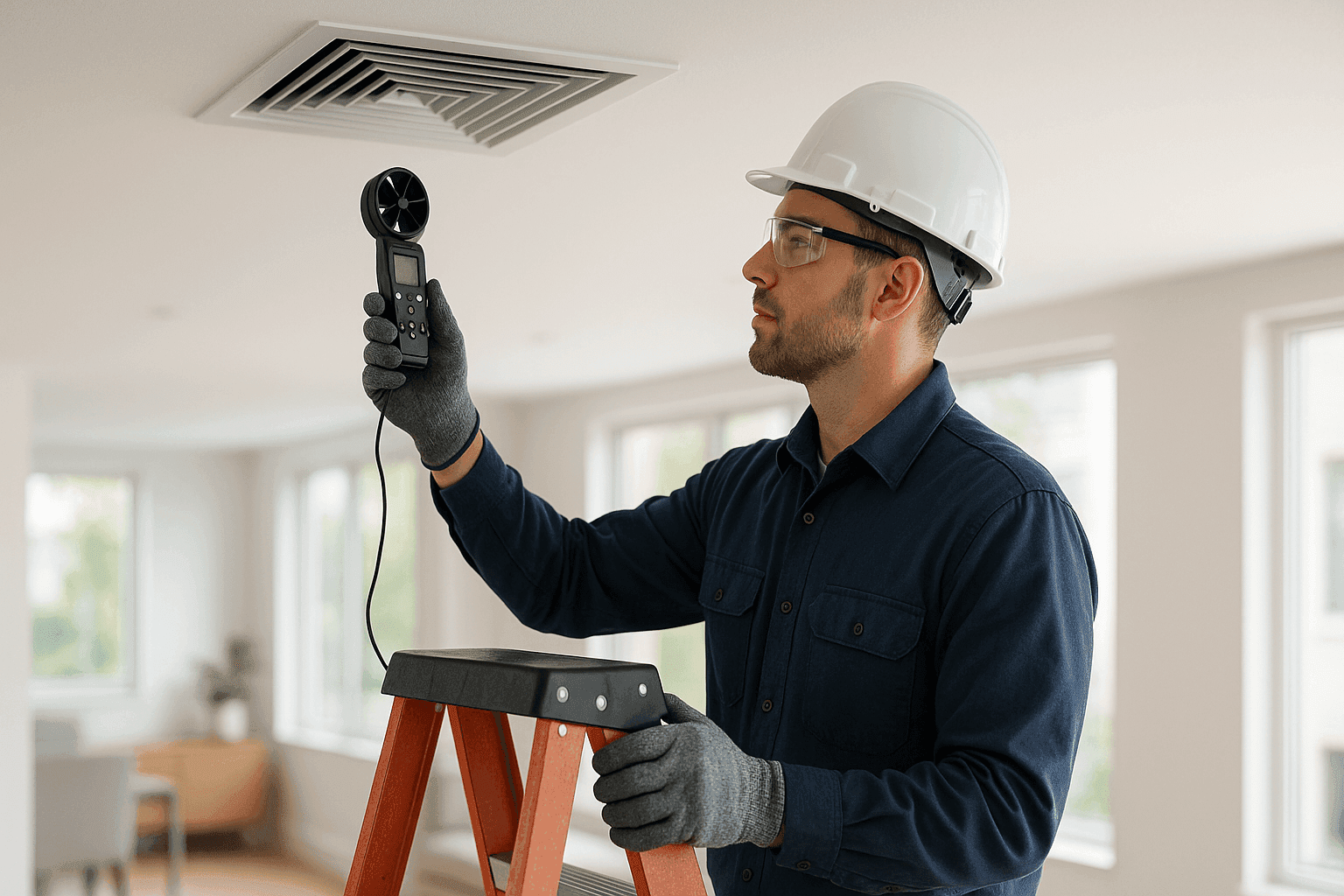
- Anemometers: These handheld meters measure actual airflow at every vent or register.
- Manometers: These devices test air pressure inside your ductwork, revealing hidden restrictions or leaks.
- Thermal cameras: Perfect for pinpointing temperature drops or heat loss zones in walls, ceilings, and ducts.
- Smoke pencils: These show us how air moves (or doesn’t) through your system—sometimes the simplest tools are the most revealing.
Our team follows standards outlined by the National Air Balancing Council (NABC) and ACCA (Air Conditioning Contractors of America) to ensure safe, effective results for every home or business.
Balancing Dampers: The Secret to Fine-Tuned Airflow
Inside your ductwork are metal plates called dampers. Think of them as traffic controllers for your air—opening or closing to direct the flow where it’s needed most.
Professional air balancing involves:
- Locating and labeling all dampers in your system
- Making careful, incremental adjustments (not just “open” or “closed”)
- Matching airflow to each room’s size, ceiling height, and usage
- Checking results with airflow meters—not just feeling for a breeze
For multi-story or open-concept spaces, damper adjustments are especially important. Upstairs rooms often get less air due to gravity, while large open areas can have “dead zones” without careful tuning.
Ductwork Adjustments & Repairs
Sometimes, dampers aren’t enough. If your ducts are leaky, kinked, or undersized, no amount of tinkering will fix the problem. Here’s what we check:
- Crushed or disconnected ducts: These cut airflow drastically.
- Improperly sealed joints: Leaks let conditioned air escape before it reaches you.
- Wrongly sized ducts: Too small? Air roars and whistles. Too large? Airflow stalls and comfort suffers.
Our certified technicians can repair or redesign ductwork as needed. We use sheet metal and flexible ducting that complies with the latest building codes and energy standards.
Aftercare Tips: Keeping Airflow Balanced
Once your system is balanced, a little care goes a long way. Here’s what we recommend:
- Replace filters every 1–3 months (clogged filters = blocked airflow)
- Keep vents and returns clear of furniture, rugs, and drapes
- Schedule annual HVAC maintenance—especially before heating or cooling season
- Watch for new signs (dust, noise, uneven temps) and act early
For homeowners with radiant heating near you, don’t forget: floor coverings and furniture placement can impact how heat spreads, so check with your installer if you’re remodeling.
Specialized Training & Real Customer Stories
Our team at Jewel Heating receives regular, hands-on training in air balancing, following industry best practices and safety guidelines. We’ve helped families in split-level homes finally get a good night’s sleep and restored comfort to businesses frustrated with stuffy corner offices.
Here’s what one customer shared:
"We’d lived with cold bedrooms and a hot, muggy kitchen for years. After Jewel Heating balanced our system, the whole house finally feels just right—no more thermostat battles!"
Multi-Story & Open-Concept Challenges
Two-story homes and open-concept offices are notorious for airflow headaches. Warm air rises, making upstairs rooms sweltering in summer and chilly in winter. Open layouts can create drafts or “dead” spots with little air movement.
Our approach:
- Targeted damper adjustments for each level
- Balancing supply and return air for even distribution
- Custom solutions for unique layouts, including mini-splits or whole-house fans if needed
Professional air balancing is the key to year-round comfort, no matter the floorplan.
Quick Safety Checklist Before Any HVAC Work
- Always turn off power at the breaker before removing vent covers or accessing equipment
- Don’t block or close too many vents—this can overwork your system and create dangerous pressure build-up
- Use only manufacturer-approved filters and parts
- If you smell burning, see sparks, or hear loud banging—call emergency hvac services right away
DIY vs. Calling a Pro
You can:
- Change filters regularly
- Move furniture away from vents
- Check for obvious blockages
But air balancing is a science. Without the right tools and training, it’s easy to make things worse. Over-closing vents, for example, can damage your system or even cause carbon monoxide leaks. For real fixes—and safety—trust a professional.
What Pros Do On Arrival
When you call Jewel Heating for air balancing, here’s what you can expect:
- Comprehensive Assessment: We listen to your comfort concerns, check every room, and review your current HVAC setup.
- Testing: Using airflow meters and pressure gauges, we measure performance at each vent and return.
- Dampers & Ducts: We adjust dampers, inspect ductwork, and make targeted repairs as needed.
- System Optimization: We’ll test thermostat settings, check for zoning issues, and recommend any upgrades if necessary.
- Final Report: We walk you through the results—so you feel the difference, not just hear about it.
Prevention & Maintenance
Balanced airflow isn’t a “set it and forget it” job. Here’s how to keep things running smoothly:
- Annual HVAC maintenance (per manufacturer and ENERGY STAR guidelines)
- Duct cleaning every 3–5 years, especially if you notice dust or allergies increasing
- Regular IAQ (indoor air quality) testing for peace of mind
Costs & Time Factors
Every home and business is different, so costs can vary. Air balancing might take 2–6 hours, depending on system complexity and size.
- Minor adjustments: quick and affordable
- Major ductwork repairs or redesign: more time, more materials
- Larger spaces (multi-story or open concept): expect a bit more time for thorough testing
Always ask for a detailed scope of work. At Jewel Heating, transparency is our standard.
When It's an Emergency
Sudden loss of airflow, rapid temperature swings, or equipment overheating? These can spell trouble—and safety risks. If you notice:
- No air coming from vents
- Overheating furnace or AC (burning smell, loud noises)
- Thermostat won’t respond
Call for emergency hvac help immediately. Rapid response can prevent property damage and bigger repairs.
FAQ: Air Balancing & Comfort
Q: Does air balancing really make a difference in older homes?
A: Absolutely. Older ductwork often has leaks or design flaws. Air balancing can restore comfort and efficiency.
Q: How often should I have air balancing checked?
A: Any time you remodel, add new rooms, or notice uneven comfort. Otherwise, every 3–5 years is a good rule of thumb.
Q: Can I close vents in unused rooms to save energy?
A: Not recommended without professional advice. Closing too many vents can actually increase pressure and waste energy.
Q: What if I have both radiant heating and forced air?
A: We can balance both, but each system needs a tailored approach. Let your technician know about all heating/cooling sources.
Local and Seasonal Considerations 🌦️
In our region, extreme weather swings make airflow issues more noticeable—think sweltering summers and icy winters. Multi-story homes and offices face unique challenges as heat rises or escapes. Spring and fall are ideal for tune-ups before the busy heating or cooling season.
If you’re searching for “Radiant Heating near you,” or need urgent AC repair, remember: professional air balancing is the foundation for every comfort solution.
Ready to fix uneven temperatures and say goodbye to stuffy rooms?
Call Jewel Heating now — or reach us anytime at 888-865-9429 .